Regulatory signs
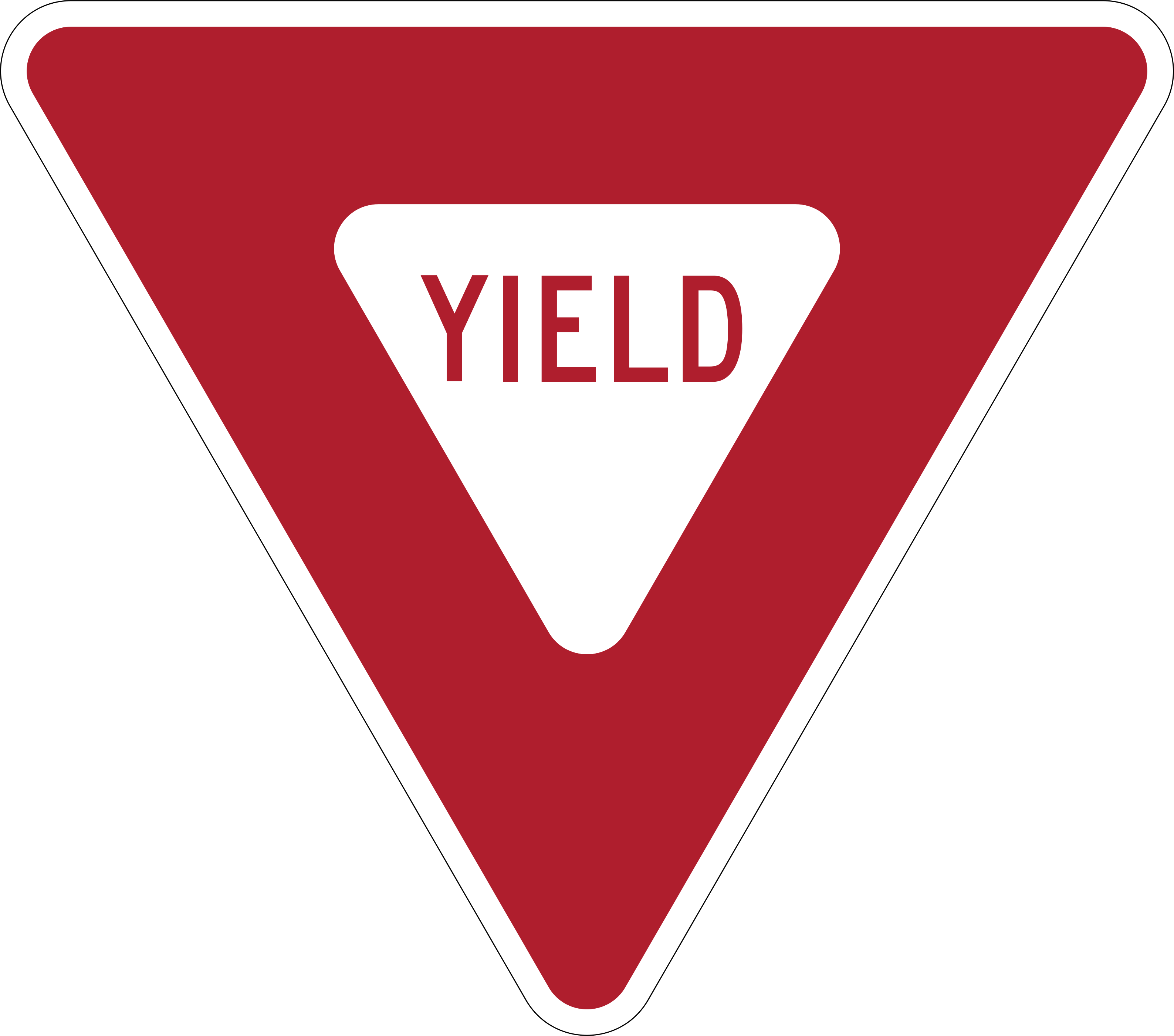
Yield sign
Slow down and give the right of way to traffic and pedestrians already in or approaching the intersection. Stop only if you need to.
- Downward triangle
- White
- MUTCD R1-2
Shape and background first
Federal designation R1-2 in the MUTCD, the national standard every state signs to.
What the MUTCD specifies
Designation: R1-2
MUTCD Section 2B.05
Conventional road size: 36 x 36 x 36 in
Standard: Install the YIELD sign on the near right side of the approach and as close to the intersection as practical.
Source: Federal Highway Administration, MUTCD 11th Edition (December 2023), Part 2, Table 2B-1; Section 2B.05; Section 2B.18, verified 2026-09-26.
How states handle it
- CA: At a yield sign, yield to vehicles already in the intersection or close enough to be an immediate hazard, and keep yielding until you can proceed safely. Source: CVC 21803, verified 2026-09-26.
What the test wants you to know
The mistake people make
The downward triangle is used for nothing else. The distinction examiners test is that a yield does not require a stop when the way is clear, while a stop sign always does.
The sign people confuse it with
Yield gets mixed up with Stop more than any other pairing in this category. Put them side by side and the difference is obvious, which is exactly why it is worth doing once rather than meeting them cold in the exam.
Yield
Slow down and give the right of way to traffic and pedestrians already in or approaching the intersection.
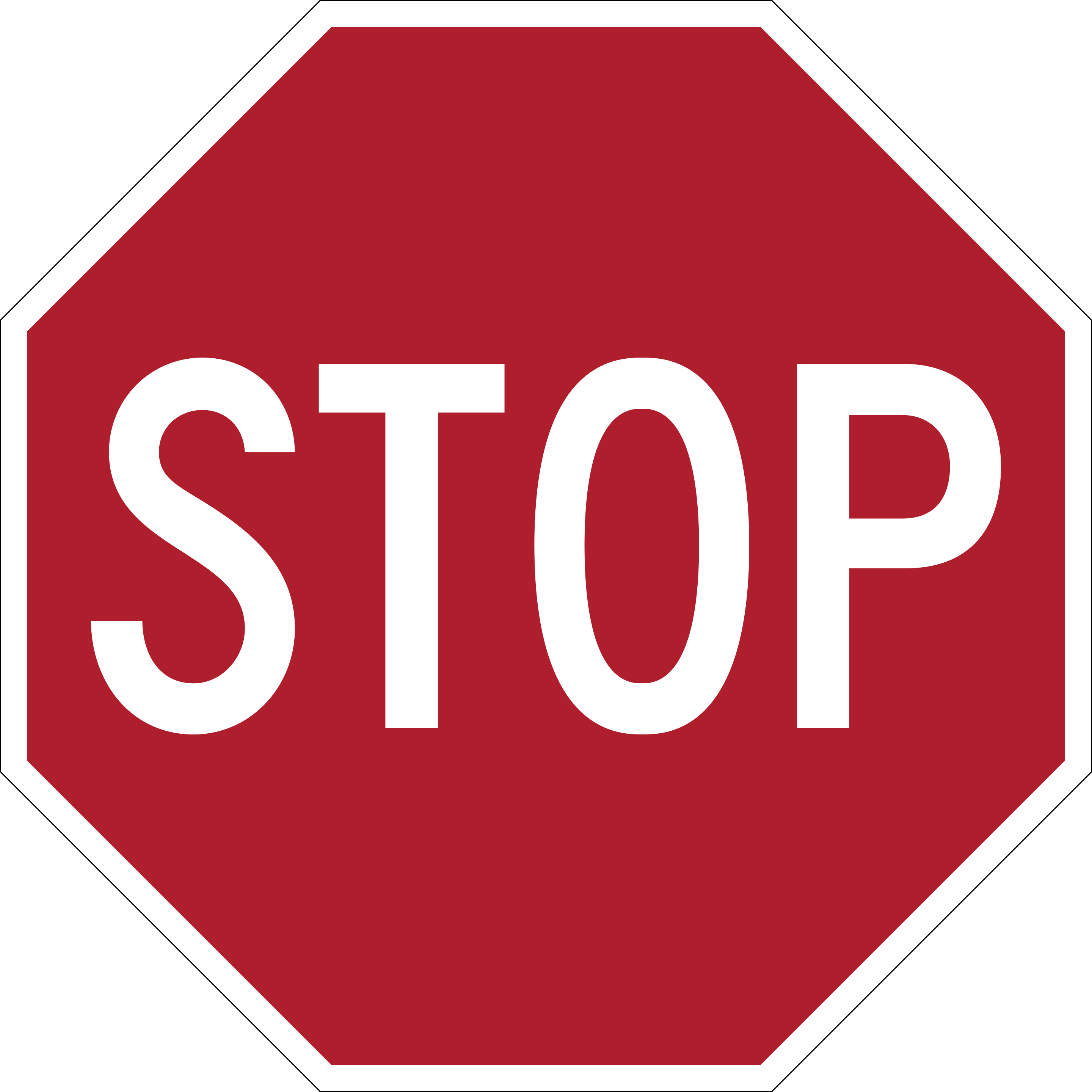
Stop
Come to a complete stop at the line, the crosswalk or the edge of the intersection, then proceed only when it is safe.