Regulatory signs
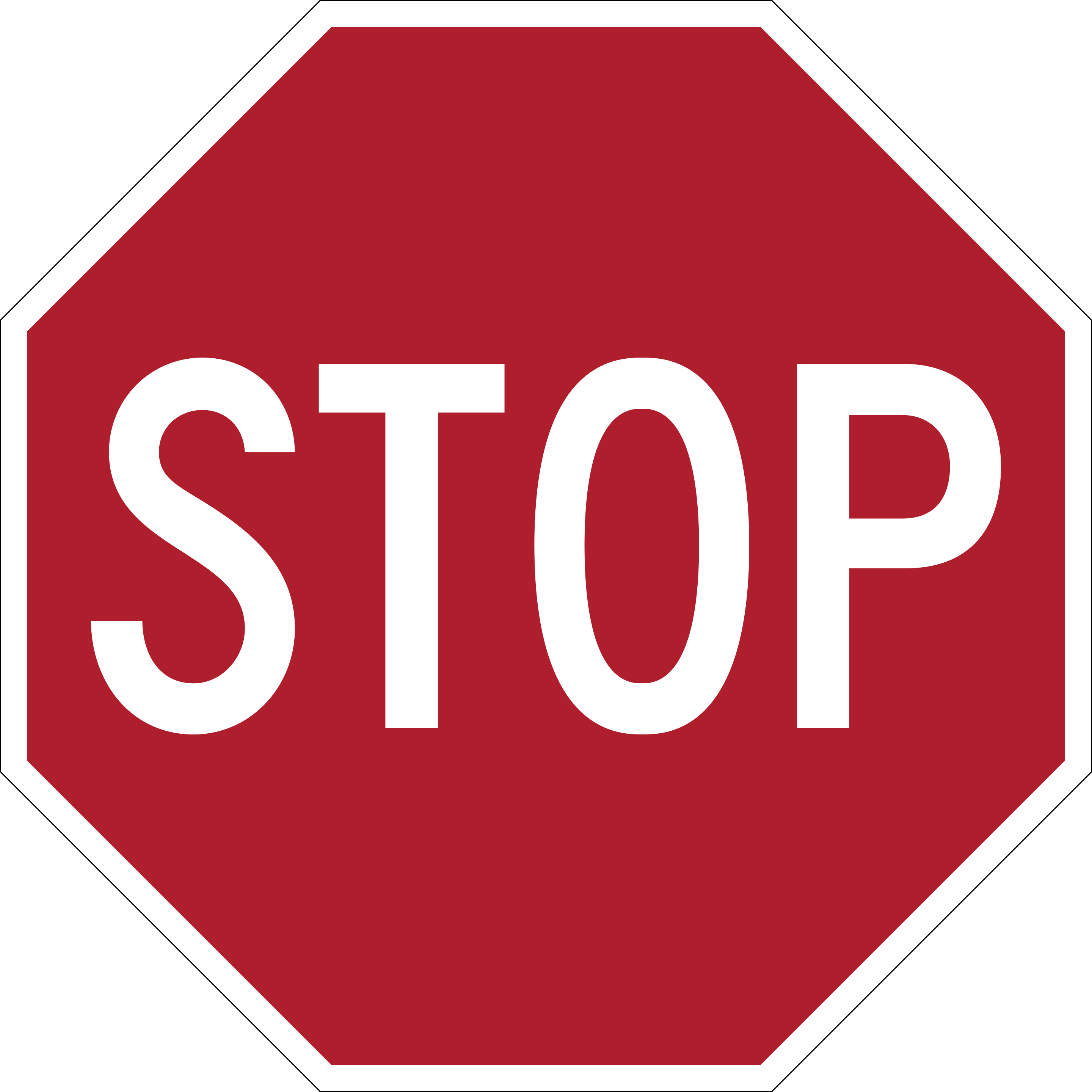
Stop sign
Come to a complete stop at the line, the crosswalk or the edge of the intersection, then proceed only when it is safe.
- Octagon
- Red
- MUTCD R1-1
Shape and background first
Federal designation R1-1 in the MUTCD, the national standard every state signs to.
What the MUTCD specifies
Designation: R1-1
MUTCD Section 2B.04
Conventional road size: 30 x 30 in
Standard: Use a STOP sign on an intersection approach when traffic there must always come to a full stop.
Source: Federal Highway Administration, MUTCD 11th Edition (December 2023), Part 2, Table 2B-1; Section 2B.04, verified 2026-09-26.
How states handle it
- CA: Where stop signs do not control every approach, stop, then yield to vehicles that have approached on the cross road or are close enough to be an immediate hazard. Once you have yielded and enter, approaching drivers must yield to you. Source: CVC 21802, verified 2026-09-26.
- TX: After stopping, go only when you can enter the intersection without interfering with or colliding with cross traffic. A driver who stops and then collides with or interferes with that traffic is presumed not to have yielded. Source: Transp. Code 545.151, verified 2026-09-26.
- FL: At a four-way stop, the first vehicle to stop goes first. If two or more arrive at the same time, the driver on the left yields to the driver on the right. Source: Fla. Stat. 316.123, verified 2026-09-26.
- NY: Unless a police officer directs you on, stop, then yield to any vehicle already in the intersection or approaching closely enough to be an immediate hazard while you cross. Source: VTL 1142, verified 2026-09-26.
What the test wants you to know
The mistake people make
The octagon is reserved for this one sign so a driver can recognize it from behind or in snow when the face is unreadable. Tests love asking what a complete stop means: the wheels stop turning, and rolling through at walking pace is still a violation.